
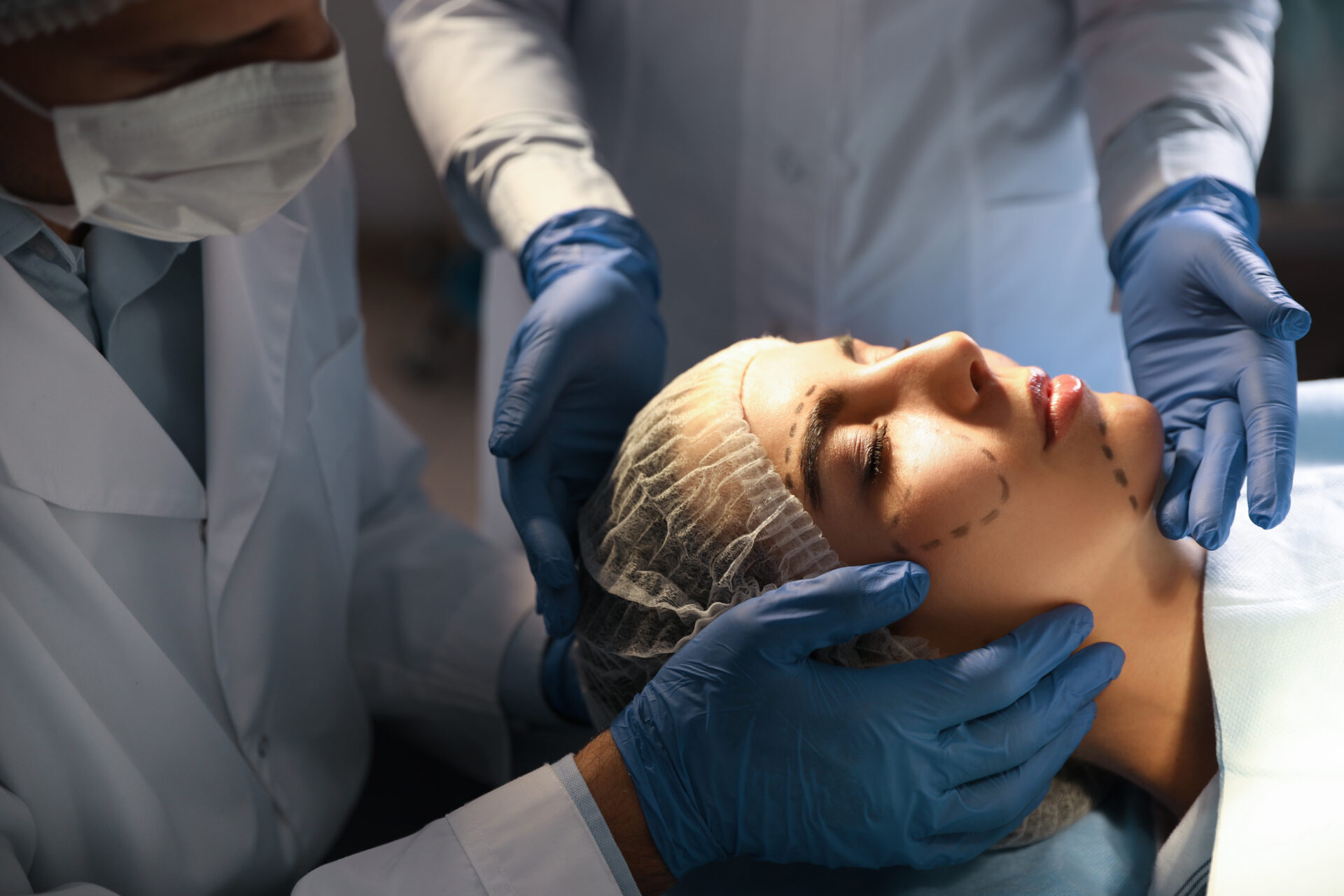
Plastic surgery is more accessible and more openly discussed than it was even a decade ago. People get rhinoplasties, breast augmentations, facelifts, and a range of minimally invasive procedures without much social stigma attached. For most people who pursue cosmetic procedures, the decision comes from a genuine desire to change something about their appearance, and the result produces measurable satisfaction.
For a smaller group, the picture is more complicated. Body dysmorphic disorder — BDD — is a condition in which a person becomes preoccupied with a perceived flaw in their appearance that others typically can’t see, or see only minimally. The preoccupation drives significant behavioral patterns, including repeatedly seeking cosmetic procedures that never produce lasting relief.
Therapists are frequently asked to help draw the line between a healthy cosmetic decision and one driven by BDD, and that can be hard, because most perceived flaws are subjective to the individual.
What is Body Dysmorphic Disorder?
Body dysmorphic disorder is an obsessive-compulsive related disorder that follows the OCD pattern: intrusive, unwanted thoughts paired with compulsive behaviors designed to relieve the anxiety those thoughts produce. In BDD, the intrusive thoughts center on appearance — a nose that seems too large, skin that seems blemished, a feature that seems asymmetrical — and the compulsive behaviors include mirror-checking, seeking reassurance, camouflaging the perceived flaw, and repeatedly seeking procedures to fix it.
BDD produces a mismatch between the person’s perception of the flaw and what others actually observe. A person with BDD may spend hours examining a feature that their friends, family, and physicians can barely discern. The disorder carries high rates of depression, social withdrawal, and impaired functioning — but cosmetic correction doesn’t resolve it. A procedure that addresses the specific feature of concern typically doesn’t produce relief. The preoccupation either stays on the same feature or shifts to a new one.
How Therapists Assess the Difference
When someone comes to a therapist asking about cosmetic surgery — or a surgeon refers a patient for psychological clearance — the evaluation involves a clinical conversation that explores several dimensions at once.
* The first area therapists explore is the nature of the concern itself. A person who wants a rhinoplasty because they’ve always disliked the profile of their nose and feels the change would make them more comfortable in social situations is describing something different from a person who thinks about their nose for several hours a day, examines it repeatedly in mirrors, and has already had two previous procedures on the same feature without feeling better. The difference isn’t in the feature or the procedure — it’s in the relationship the person has with their appearance and how much of their daily life it consumes.
Therapists also look at motivation and expected outcome. Healthy cosmetic decisions tend to involve realistic expectations — the person wants a specific change and understands that surgery addresses the physical feature without guaranteeing broader life changes. BDD-driven motivation tends to involve the belief that fixing the feature will resolve much larger problems, repair relationships, or produce a sense of self that the preoccupation has been blocking.
Several specific clinical signs point more clearly toward BDD:
- Preoccupation That Consumes Significant Time — Thinking about the perceived flaw for an hour or more each day, or finding that thoughts about it intrude regularly into daily functioning.
- History of Multiple Procedures Without Relief — Having had previous cosmetic work on the same or similar concerns and finding that the result didn’t produce the expected satisfaction, or quickly shifted focus to a new concern.
- Social Avoidance Driven by Appearance — Avoiding social situations, photographs, or public settings specifically because of the perceived flaw.
- Mirror Checking or Avoidance — Compulsively checking the feature in mirrors, windows, or phone cameras, or completely avoiding reflective surfaces to prevent distress.
- Seeking Reassurance — Repeatedly asking others whether the feature looks the way the person fears, while finding that reassurance provides only brief relief.
- Camouflaging Behaviors — Spending significant time covering the perceived flaw with clothing, makeup, or positioning.
The presence of several of these together, particularly alongside high distress and functional impairment, moves the clinical picture toward BDD rather than a straightforward cosmetic preference.
Why the Evaluation Requires Care
The reason this assessment requires clinical skill rather than a simple screening instrument is that the categories genuinely overlap. A person can have realistic concerns about a feature and also have some BDD tendencies. Someone whose appearance concern is rooted in trauma — a scar, a feature that became associated with a painful experience — presents differently from someone whose concern developed without a traceable origin.
Therapists working in this area also recognize that social media has complicated the landscape significantly. Constant exposure to filtered images, face-altering apps, and the ability to see one’s own face from every angle creates appearance concerns in people who wouldn’t have developed them otherwise. Whether a specific concern reflects BDD, a reasonable response to a real cultural environment, or something in between requires context, time, and genuine clinical engagement.
What Happens When BDD Is Present
When a therapist identifies BDD as the driver behind a pursuit of cosmetic surgery, the recommendation is typically to address the BDD before any procedure. Plastic surgery in the context of active BDD almost always fails to produce the relief the person is seeking. In some cases, it worsens the disorder, by confirming the belief that the appearance concern was legitimate and fixable while leaving the underlying pattern untouched.
CBT with a specific focus on exposure and response prevention — the same approach used for OCD — is the most evidence-supported treatment for BDD, alongside work on the core beliefs about self-worth and appearance that sustain the preoccupation. When BDD treatment works, many people find the cosmetic concern either resolves or becomes something they can relate to differently, and the drive toward repeated procedures diminishes significantly.
For people whose body image concerns don’t meet BDD criteria but still create real distress — a category that includes many more people — therapy addresses the relationship with appearance more broadly, building self-concept on a foundation that doesn’t depend on specific features looking a specific way.
Flourish Psychology works with individuals navigating body image concerns, BDD, and the intersection of appearance and self-worth at their Brooklyn Heights office, with online therapy available throughout New York State. To get started, call 917-737-9475 or schedule an appointment online.